
Explore Buddhism for Beginners through Questions 41–45 on karma,
morality, divine beings, inner virtue, harmful tendencies, and the karma of speech.
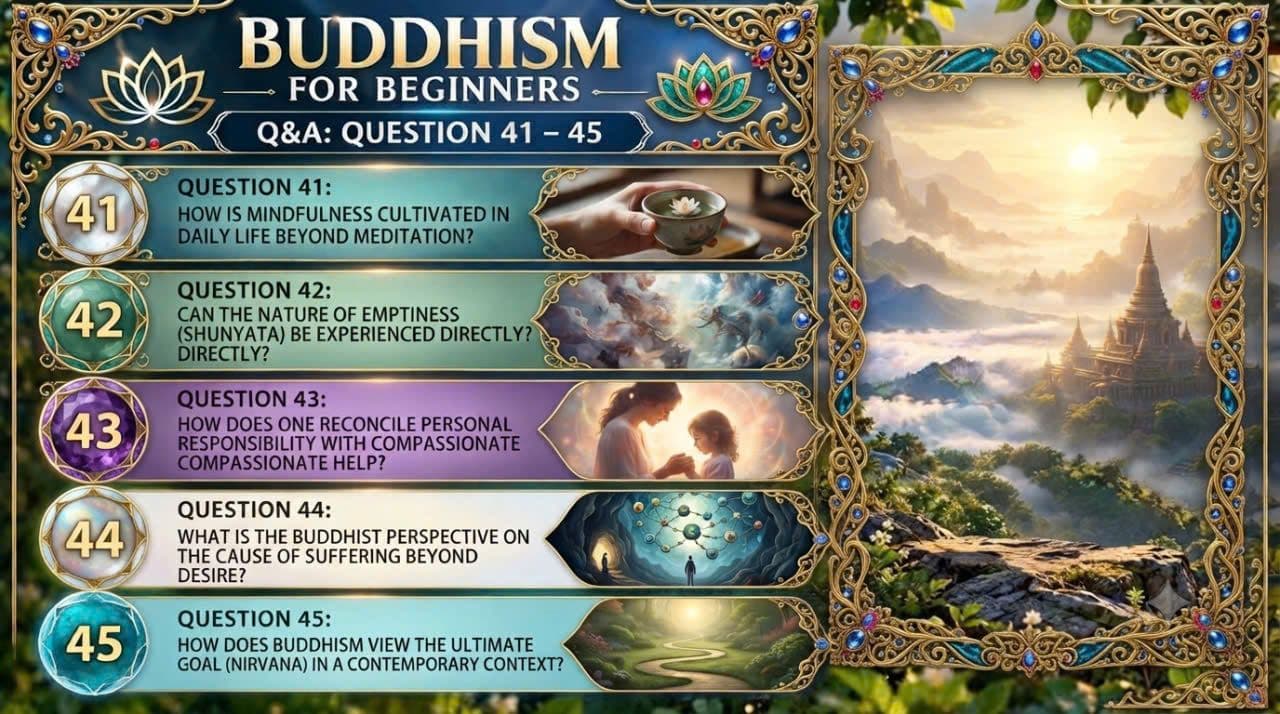
BUDDHISM FOR BEGINNERS – Q&A: QUESTION 41 – 45
Question 41: WHAT IS THE DIFFERENCE BETWEEN THOSE WHO BELIEVE IN DIVINE INTERVENTION AND THOSE WHO RELY ENTIRELY ON THEIR OWN MERIT?
Answer: Those who place their faith in divine intervention often exhibit an endearing humility, but they may not always discern between good and evil, just believing that any sin can be forgiven by the divine. In some cultures, even crime bosses devoutly worship and pray daily, seeking forgiveness and grace from the divine.
On the other hand, those who believe in the Law of Karma thoroughly consider the consequences of their actions, avoiding harm to others out of fear that it would return to them. However, if they solely rely on the Law of Karma and disregard Divine Beings, they may fall into the trap of arrogance and pride.
Overall, it is best to have both: belief in the Law of Karma and a willingness to pray and connect with the Divine Beings with reverence.
Question 42: WHY DO PEOPLE CREATE DEITIES TO WORSHIP?
Answer: Humans are highly intelligent and capable of creating a wide range of things, from those that are beneath them to those that are greater than themselves. For example, a poor writer might create a wealthy character, vastly different from himself.
Throughout human history, there have been times when Saints appeared among people, leaving behind valuable teachings. Additionally, in real life, there have also been numerous occasions when humans have interacted with beings from the spiritual realms.
Combining these experiences, along with a genuine desire for humanity to have faith in higher powers, and to live more morally, some exceptionally intelligent and bold individuals have created deities to teach morality to people in the name of these deities.
Even within a single religion, people also create additional deities to enrich their belief system. For example, in Buddhism, there was originally only one Supreme Master, Sakyamuni Buddha, but over time, other Buddhas were introduced, even though these Buddhas never appeared in this world.
The Divine above does not mind how humans create divine figures. If someone is moral, these Divine Beings will still bestow love, blessings, and protection upon them.
Question 43: HOW CAN WE CULTIVATE INNER MORALITY?
Answer: In the Noble Eightfold Path, the practice of Right Consideration is meant to cultivate inner morality.
Morality consists of the virtuous tendencies within us that drive us to bring happiness and goodness to others. These include qualities such as compassion, generosity, patience, humility, gentleness, self-restraint, selflessness, rejoicing in others' happiness, courage to help people in need, love for nature and all living beings, environmental consciousness, a sense of responsibility to the community, and diligence.
These moral inclinations are intangible and not expressed through language, but they guide our actions and speech when we need to handle situations.
To cultivate these moral tendencies, we must consciously and repeatedly instruct ourselves through self-talk, reminders, and even prayers, asking the divine to help us develop these virtues. Over time, these tendencies will solidify in our minds and become a sustainable moral mindset.
For example, if we find that we lack humility and tend to be silently prideful, we can remind ourselves that we are but dust and grass, so we must respect everyone and be polite. We can pray for divine assistance to help us develop humility. After a few months, we may find that we have truly become humble.
We can also find scriptures or teachings on morality and recite them daily at the altar. This practice will help us build lasting virtues.
Question 44: HOW SHOULD WE DEAL WITH UNWHOLESOME TENDENCIES THAT DEEPLY INGRAINED IN OUR MIND?
Answer: Some people have deeply ingrained unwholesome tendencies that are difficult to resolve, such as arrogance, disobedience to parents, selfishness, lust, or gambling addiction. Even when advised, they may not change because if they do not want to change, they cannot engage in Right Consideration to counsel themselves. Most of these individuals only regret their actions after facing severe karmic consequences, but then they tend to revert to their old ways.
These individuals may only change when they encounter an extraordinary Enlightened Being whom they deeply admire. Their admiration for this Saint gives them the merit to gradually recognize their faults and repent.
Alternatively, if they fall into despair and someone helps them generously, their gratitude may help them gradually see their mistakes (unless they are ungrateful, in which case there is no hope for them).
Hell is essentially a place for dealing with such stubborn individuals. Only after enduring prolonged suffering will their stubbornness begin to soften. We should not think of hell as a place of excessive cruelty designed to make sinners scream in pain. The harsh nature of hell is necessary to reform those who are so obstinate that other methods of transformation are ineffective. Only severe punishment can make them realize their faults.
Even now, if someone realizes they are stubborn, refuse to heed the advice, and enjoy causing harm to others, they should understand that hell awaits them.
Question 45: WHAT CAUSES GOOD AND BAD KARMA FROM SPEECH?
Answer: Language is a means of communication, allowing us to share our thoughts with others. In the Heaven realms, Celestial Beings rarely need to speak because they understand each other's minds directly. However, humans cannot perceive each other's thoughts and must rely on language, whether spoken, written, or expressed through symbols and gestures to communicate.
Language is used to influence the minds of others, and this is where karma comes into play.
If we convey the right views to others, we gain merit; if we impart wrong views, we incur sin. The story of Zen master Baizhang in China tells about a great master from the time of the past Buddha Kasyapa, who relied on his meditative concentration ability to claim that the Law of Karma does not affect those with high spiritual attainment like him. As a result, he was reborn as a fox for 500 lifetimes until he met Zen master Baizhang, who helped him correct his wrong views and be liberated from the life of the fox.
The Shakyamuni Buddha praised those who teach the Law of Karma to others, saying they will be reborn in the heavenly realms.
If we encourage people to love one another, we gain merit; if we encourage people to love only themselves, we incur sin.
If we impart useful knowledge to others, we gain merit; if we share trivial information that confuses others, we incur sin.
Preachers who accurately teach the true Dharma accumulate great merit, while those who misinterpret it incur great sin. If their teachings lead people to arrogance, it is sinful; if they promote humility and morality, it is commendable.
Writers, poets, and musicians who evoke noble emotions in people gain significant merit, while those who encourage paltry emotions incur sin.
Speech is a means that can impact others' hearts. If our words cause others pain or humiliation, we incur sin; if our words encourage others and help them grow, we gain merit.
Using words to deceive, commit fraud or manipulate others to take money transcends the mere karma of speech and becomes the karma of action, leading to negative karmic consequences.
In general, we should use language as a tool to uplift and enhance others' souls, which brings us merit.
Written by:
Janna
Related Articles:
Buddhism for Beginners – Q&A: Questions 36–40
Buddhism for Beginners – Q&A: Questions 31–35 | Spirits, Merit.
Buddhism for Beginners Q&A: Questions 26–30 – Suffering, Liberation
Buddhism Q&A 21–25: Nirvana and the Four Noble Truths
Buddhism Questions 16–20: Heaven, Karma, Nirvana & Enlightenment
Questions 11–15: Karma, Reincarnation and the Six Realms
Buddhism for Beginners – Q&A: Questions 6–10 | Karma
Buddhism for Beginners – Basic Teachings and Beliefs – Q&A 1–5
Instruction on Meditation: Essential Methods and Practice Guide