
BUDDHISM FOR BEGINNERS - Q&A - QUESTION 1 - 5
BUDDHISM FOR BEGINNERS - Q&A - QUESTION 1 - 5
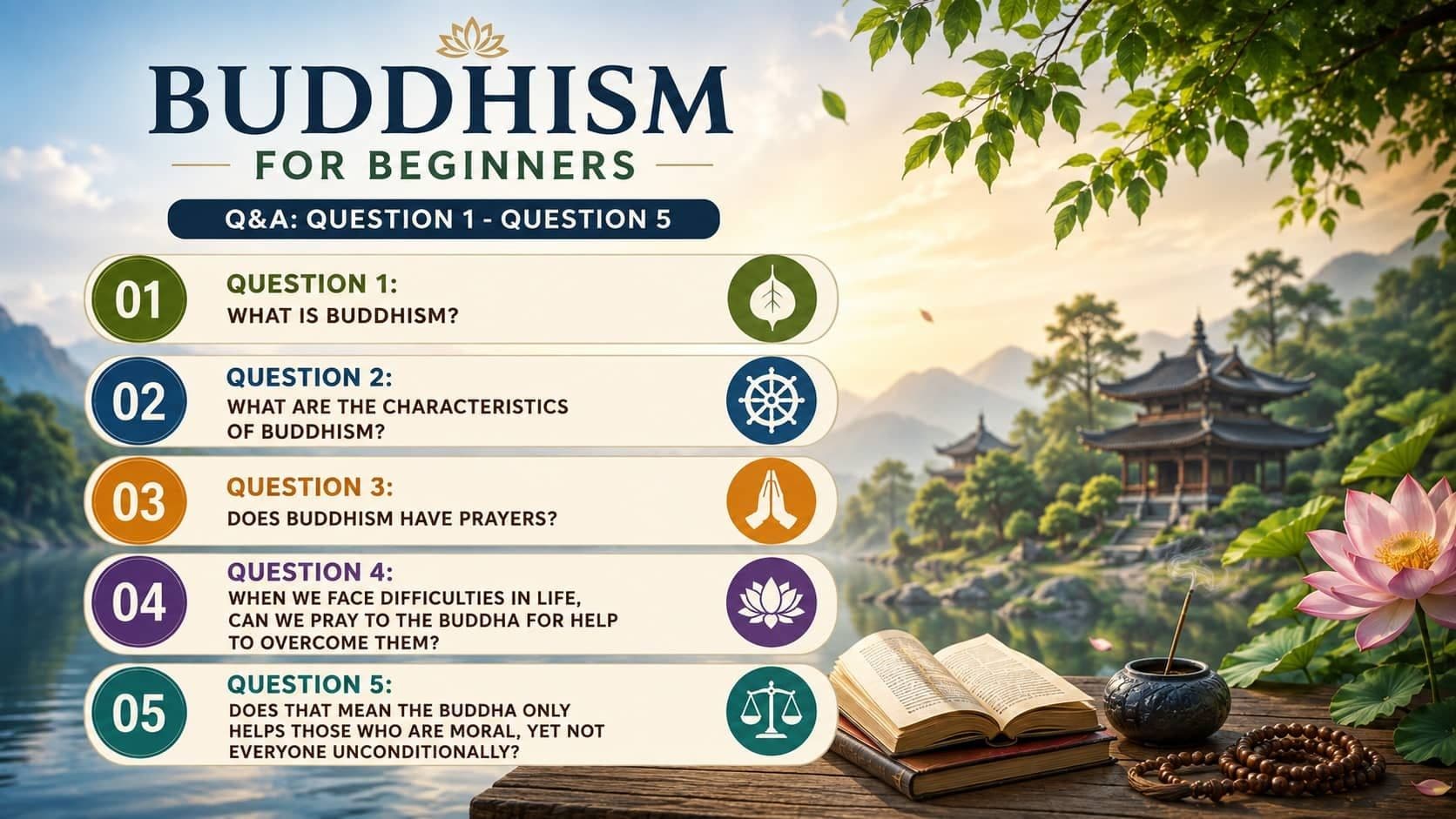
Question 01: WHAT IS BUDDHISM?
Answer: There are many religions in the world, and Buddhism is one of the major ones. Buddhism was founded by Siddhartha Gautama, known as the Buddha. It originated in India around the 5th-6th century BCE and later spread to many countries. Buddhism has a detailed, logical, and rich system of doctrine (dharma) based on the teachings of the Buddha. It also has a monastic community (sangha) responsible for preserving, and spreading the Buddha’s teachings (dharma), and guiding Buddhists to practice according to those teachings. Additionally, Buddhism features its unique religious rituals.
Question 02: WHAT ARE THE CHARACTERISTICS OF BUDDHISM?
Answer: Unlike many other religions that worship deities in the heavens and often pray to these deities for blessings in life and the promise of a heavenly afterlife, Buddhism focuses on enhancing human morality in the present life, helping individuals achieve an exceptionally clear and pure inner state of mind, known as Enlightenment. An Enlightened One can understand everything in the universe. Therefore, Buddhism also serves as a wonderful complement to other religions.
Question 03: DOES BUDDHISM HAVE PRAYERS?
Answer: Buddhism does have prayers and chanting, similar to other religions. The purpose of praying or chanting is to recall the teachings of the Buddha, to make promises to the Buddha about the good things we want to do and to ask for the Buddha’s guidance in cultivating our inner morality. For example, if we want to love everyone, but find it difficult to do so, we pray to the Buddha to help us love everyone. Gradually, we might start feeling love for everyone, making those around us very happy.
Question 04: WHEN WE FACE DIFFICULTIES IN LIFE, CAN WE PRAY TO THE BUDDHA FOR HELP TO OVERCOME THEM?
Answer: In Buddhism, there is a large system of Divine Beings, including Buddhas, Bodhisattvas, and deities, who are responsible for watching over and helping humans. Those who cultivate moral virtues, help others, show compassion, respect the venerable, and revere the Divine Beings will receive assistance and protection through prayers in the face of difficulties and accidents. These Divine Beings help us because they know that after we overcome difficulties, we will continue to live good lives, filled with love and assistance for others.
Question 05: DOES THAT MEAN THE BUDDHA ONLY HELPS THOSE WHO ARE MORAL, YET NOT EVERYONE UNCONDITIONALLY?
Answer: If divine assistance were unconditional, no one would bother to cultivate morality or live a virtuous life, since even malicious people would receive assistance just by praying. Everything must be fair; the universe holds absolute fairness, and deities must be even more just than humans. Those who live generously, and kindly, and help others deserve to be helped and rewarded. Those who live maliciously, selfishly, and harm others will suffer and be punished. This fairness is what the universe, Divine Beings, and human laws must follow to keep the world stable.
Written by:
Janna
Related Articles:
Thinking You Are Right: The Wisdom of Recognizing Right and Wrong
A Wholesome Mind Creates Merit Without Intention
Instruction on Meditation: Essential Methods and Practice Guide
What Is Meditation? The Path to Inner Peace, Awakening & Liberation