
Explore Questions 6–10 about Buddhism, justice, karma,
cause and effect, merit, morality, and how our actions may influence present and future circumstances.
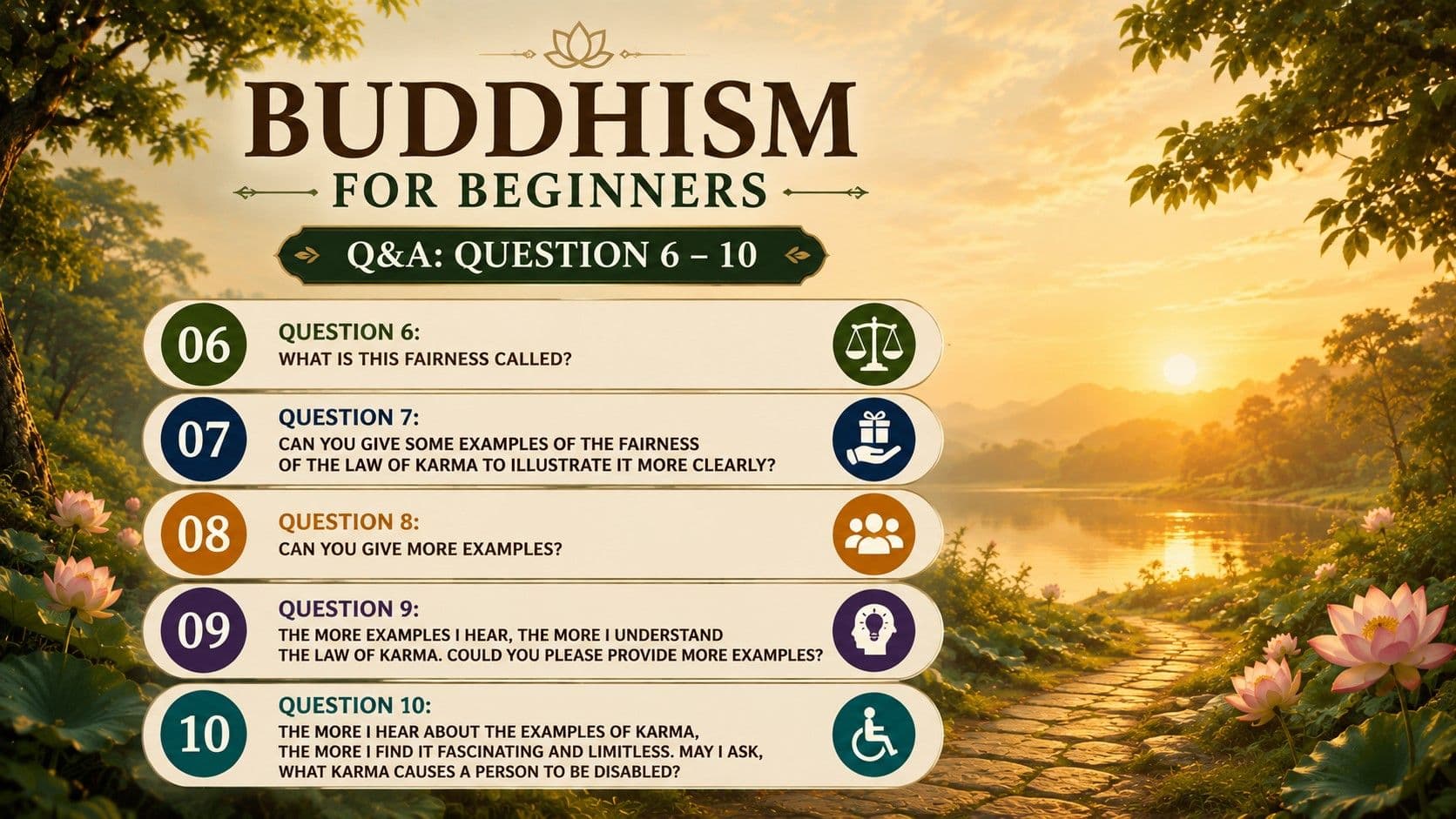
BUDDHISM FOR BEGINNERS – Q&A: QUESTION 6 – 10
Question 06: WHAT IS THIS FAIRNESS CALLED?
Answer: Among humans, this fairness is called Justice. In the Heaven realm, it is called Divine Law. Throughout the universe, it is called the Truth. In Buddhism, it is known as the Law of Cause and Effect, or the Law of Karma.
Human justice is not absolute because it can be influenced by personal interests. The Divine Law in the Heaven realm is almost absolute because deities are more impartial, though they still have emotions. The Truth of the universe, also known as the Law of Cause and Effect or the Law of Karma, is absolutely fair. Anyone who wishes to cultivate morality should strive to understand this fair Law of Karma as thoroughly as possible.
Question 07: CAN YOU GIVE SOME EXAMPLES OF THE FAIRNESS OF THE LAW OF KARMA TO ILLUSTRATE IT MORE CLEARLY?
Answer: For example, if we give money to a malicious person, enabling them to commit more evil deeds, we incur negative karma. As a result, we may later face financial difficulties or experience misfortune. Conversely, if we give money to a poor person in need who is not malicious, we will gain positive karma. This merit (*) ensures that we will never fall into extreme financial hardship in the future. Additionally, if we give money to a virtuous person who frequently does good deeds and contributes positively to society, we will accumulate great merit. This significant merit will result in us having more money and experiencing many fortunate events in our lives.
(*) merit in Buddhism refers to the positive spiritual energy or karma accumulated through good deeds, moral conduct, generosity and spiritual practices. Merit brings about favorable conditions in this life and future lives, contributing to one's spiritual progress toward enlightenment.
Question 08: CAN YOU GIVE MORE EXAMPLES?
Answer: For instance, if we see a damaged road and spend our time, effort, and money to repair it, making it safer and more convenient for people to travel, we gain positive karma. Thanks to this good karma, our future endeavours will go smoothly and easily, we will experience good fortune, avoid traffic accidents, and easily acquire vehicles.
Another example is if we notice poor students lacking books and sometimes going to school hungry. If we help by giving them money for books and providing food, enabling them to study well, we gain positive karma. Due to this merit, we will excel in our studies, enjoy a prosperous family life, and have a successful career.
If we frequently encourage people to love and help each other, we will not be lonely. We will always be surrounded by laughter and have many beloved people around us when we pass away. Conversely, if we often speak ill of others, causing suspicion and estrangement among people, we will eventually face the karma of loneliness, with no one wanting to be near us, and we may die alone without anyone knowing.
If we admire and respect good people, praise their virtues, and support them, we will naturally develop those good qualities by ourselves without much effort. Conversely, if we envy, criticize, and hinder good people, our minds will become corrupted by negative thoughts, making us prone to wrongdoing and condemned by society.
Question 09: THE MORE EXAMPLES I HEAR, THE MORE I UNDERSTAND THE LAW OF KARMA. COULD YOU PLEASE PROVIDE MORE EXAMPLES?
Answer: For instance, if we often think of ourselves as superior and look down on others, we will gradually find ourselves falling into a lower status, with poor character and social standing, and no one will like us. Conversely, if we think humbly of ourselves, consider ourselves ordinary or lowly, and show respect to everyone, we will gradually progress, becoming smarter, luckier, and more beloved by others. This is similar to what Jesus said in the Gospel: "For those who exalt themselves will be humbled, and those who humble themselves will be exalted."
Another example is if we owe a debt that we cannot repay or receive a favor that we cannot return, we may become subordinates to our benefactors in the future, serving them to repay the debt or favor.
If we learn something valuable and share it with others instead of keeping it to ourselves, we will become extremely knowledgeable and intelligent, possibly even reaching the level of a genius.
If we often help build public facilities for many people to use, such as schools, hospitals, libraries, religious buildings, and retirement homes, we will be rewarded with a spacious and comfortable home in the future.
Question 10: THE MORE I HEAR ABOUT THE EXAMPLES OF KARMA, THE MORE I FIND IT FASCINATING AND LIMITLESS. ANYONE INTERESTED CAN EXPLORE AND REFLECT FURTHER. MAY I ASK, WHAT KARMA CAUSES A PERSON TO BE DISABLED?
Answer: A single outcome may stem from various causes, not necessarily just one. For instance, someone with a leg disability might have damaged public roads in a previous life, fought in wars and broken the legs of enemies, or hunted animals and broken their legs to prevent them from escaping. It is difficult to pinpoint the exact cause of such a karmic result; only Enlightened Beings can truly know.
For example, blindness might result from having harmed someone's eyes in the past, taken away public light sources, imprisoned someone in darkness for too long, or ignored the suffering of others to avoid helping them.
Similarly, someone who is mute may have once prohibited others from expressing their rightful desires, cut off someone's tongue, or been too cowardly to speak out in defense of what is right.
Written by
Janna
Related Articles:
A Wholesome Mind Creates Merit Without Intention
Thinking You Are Right: The Wisdom of Recognizing Right and Wrong
Buddhism for Beginners – Basic Teachings and Beliefs – Q&A 1–5
Instruction on Meditation: Essential Methods and Practice Guide
The Three Phases of Meditation
The Beauty of the Soul: Kindness, Morality, and True Happiness