
Our presence in this life results from causes in the past,
but is not by accident. And, in turn, we now create causes for our future. Things that will happen to us in the future are in accordance with what we do now. That we go to temples with our great reverence for the Dharma, monks and nuns creates a blessing, which in turn, create various results.
PART I - THE LAW OF CAUSE AND EFFECT IS FAIR IN AN ABSOLUTE AND STRANGE WAY
Our presence in this life results from causes in the past, but is not by accident. And, in turn, we now create causes for our future. Things that will happen to us in the future are in accordance with what we do now. That we go to temples with our great reverence for the Dharma, monks and nuns creates a blessing, which in turn, create various results.
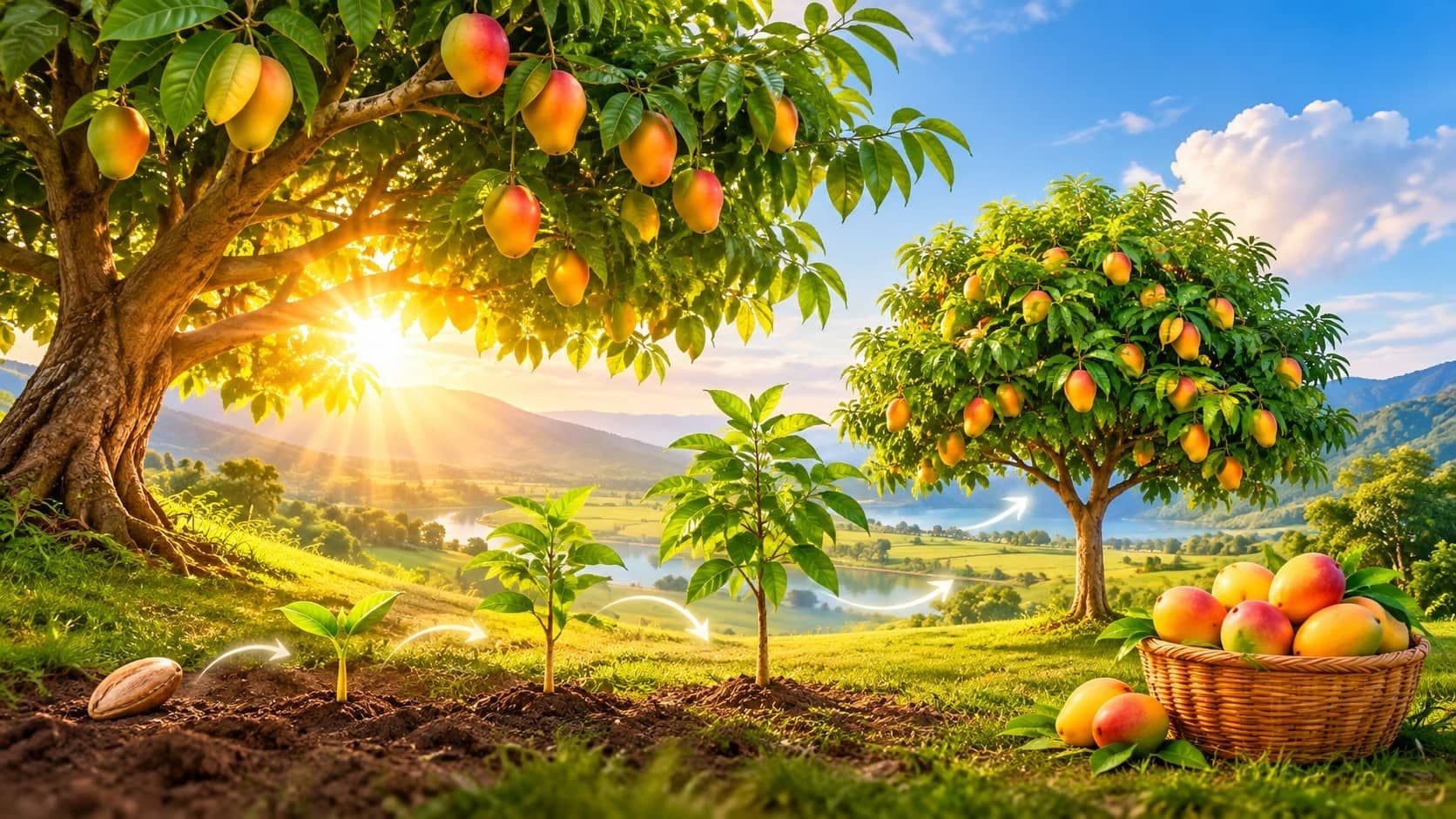
It is like when we sow a seed, we will not get only one fruit. We sow a mango seed, the mango tree will produce many mango fruits for us. However, before mango fruits appear, we have a young mango tree. This young tree will produce branches, flowers then fruits. We then have green fruits and ripe fruits. In the middle of these fruits, we also have seeds. That is, many things will appear from a seed we plant. We cannot say, "I plant a mango seed then I will have a mango fruit." It is not simple like that. So what will we have when we plant a mango seed? We will enjoy the shade of the mango tree and when it grows big, we can use its trunks and branches as firewood and its fallen leaves for cooking or fertilizing our fields. We also can enjoy its flowers and compose poems. Its fruits (green or ripe) will be eaten and its seeds will be planted again. So, from a mango seed, we will enjoy many things and receive many benefits but not just a mango fruit then finish.
Similarly, when we listen to a sermon, we will not just enjoy one good result but a lot. We come to temples to be taught morals, our soul will become noble and we will be better. Each of our words will have virtue that makes our descendants respect and obey us. We’re not sure if in our next life we will be able to enjoy our blessing but in this life, our descendants are more obedient. As when we sow mango tree, before we have its fruits, we can enjoy its shade in hot days. Likewise, when we have not yet been wealthy, our descendants are well-behaved and this is our happiness.
We will gradually be better because of our regularly coming to temples. Thus, our relatives and our neighbors love and rely on us more and more. Therefore, when we call them to do charity, they will be happy to do. For example, we tell them, “There is an old man who lives in poverty and have sickness and whose descendants stay far away, so, we should take turns to take care of him because taking care of the old is great morals of men.” Before we go to temples to be taught morals, no one listened to us, but now our words have strength that make many people follow. The first thing we should do is to help lonely old men and when they pass away, they will rest in peace. Our neighbors will be united and trust each other more and more. Previously, whenever we were away, we had worries for our property being stolen. However, when we do charity with our neighbors, we can rely on them when we are away. For example, we tell our neighbors, “Please keep an eye on my house why I'm away.” This way we will feel secure because our house is taken care of. We have not yet been able to enjoy the blessing of having a mango fruit but the shade and fallen leaves of the tree bring us happiness. That implies though our good results have not yet really come, we have a good relationship with our neighbors.
The law of Karma is extremely fair and dominates all beings, from humans to saints. If you want to be better, wealthier, more powerful, good looking... there are ways of achieving them. We do it in accordance with ethics rather than using tricks. If you wish to attain sainthood, we have ways to do although it takes time.
Even those who achieved Sainthood and wished to help sentient beings are not always to be listened to. For example, an enlightened monk who has psychic powers that he can know the past and the future of someone or can cure a person who has a serious disease with a wave will not be followed by others if he does not have a good relationship with them. Thus, an enlightened monk who wishes to convert sentient beings must have a good relationship with them first. Ordinary people, saints or even Bodhisattvas are ruled by the law of Karma. Those who believe in the law of Karma will try to cultivate and serve others and those who don't believe in the law of Karma won't try to cultivate.
It is wrong if we are superstitious and commit sins but want to achieve good results. Because we believe in the law of Karma, we should not be superstitious but diligently create good conditions to improve our life and be able to help the people nearby. For example, an underachieving student won't be an underachiever forever; if he knows what to sow, he will be better in one year or two. Likewise, a good student is very possible to become an excellent one, but not by studying harder and harder.
Basing on ethics and Buddhist doctrine, we can change everything. That's a miracle of the law of Karma.
Written by:
Janna
Related Articles:
Reincarnation and the Law of Karma: Understanding Previous Lives
What Is the Law of Karma? | Buddhism, Cause and Effect
Blessing & Guilt – Understanding Karma, Morality and Wise Actions
The Law of Cause and Effect: What We Give Others Returns to Us
The Axiom of the Law of Cause and Effect | Janna Quotes
Instruction on Meditation: Essential Methods and Practice Guide
The Basic Meditation Technique: 5 Essential Steps to Practice Meditation
Meditation, Business Intuition and Wisdom Without Greed
Meditation Q&A 86–90: Hindrances, Instincts and the Four Jhanas