
Janna · Oct 26, 2026
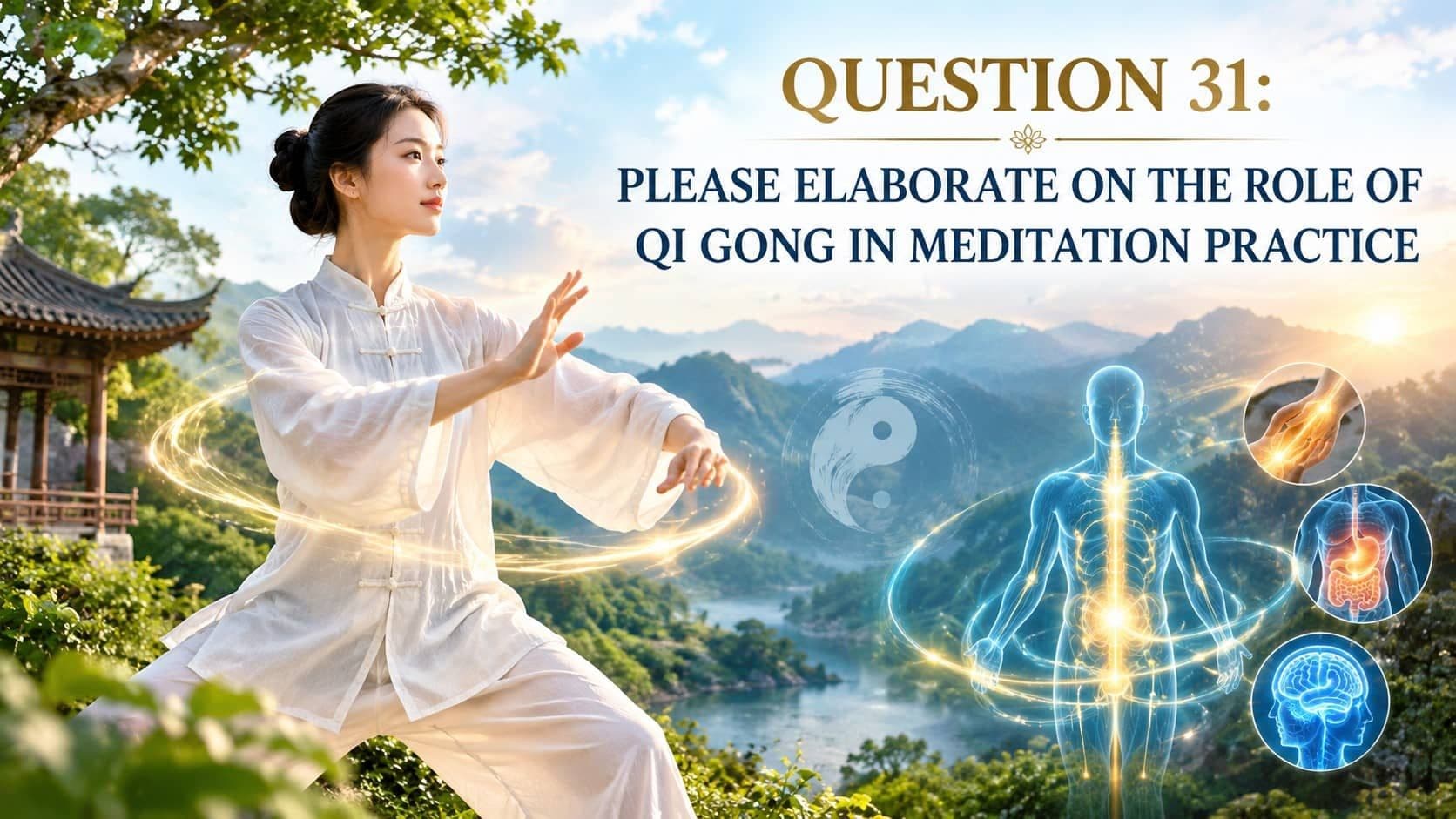
QUESTION 31: PLEASE ELABORATE ON THE ROLE OF QI GONG IN MEDITATION PRACTICE
ANSWER: In the traditions of Eastern medicine and martial arts, beyond the air we breathe, there exists a vital, invisible vital air (Qi) 19 capable of penetrating deep into the muscles, tendons, bones, and internal organs. This ‘air’ circulates through the body’s acupuncture meridians, sustaining life at every moment. It forms the foundation of diagnostic principles, health maintenance, disease prevention, and the cultivation of inner strength.
Rooted in these principles, ancient civilizations, particularly in India and China, developed Qi Gong, a refined practice for harnessing and cultivating this vital air. The term Qi signifies breath, while Gong denotes disciplined practice. Unlike conventional physical training that focuses on muscular development, Qi Gong integrates precise bodily movements with breath control to generate and sustain latent energy. Even as physical strength naturally declines with age, the internal energy cultivated through Qi Gong endures, fortifying health and resilience over time.
Qi Gong cultivates a powerful internal energy source in the lower abdomen, serving as a reservoir of strength, enhancing brain function, strengthens physical health, and sharpens mental clarity. Historically, the Buddha himself was a remarkable martial artist, raised within the warrior traditions of the Shakya clan. Building upon this foundation, He ventured into the depths of meditation. A pivotal moment in His journey occurred during the Royal Ploughing Festival, where, under a tree, he entered the first stage of meditative absorption (First Jhāna), marking the beginning of profound spiritual insight.
While meditation may outwardly appear to be a practice of calm and effortless, it demands significant physical endurance. The ability to maintain deep focus is directly influenced by one’s capacity to withstand physical discomfort—leg pain, back strain, and bodily fatigue. For those who have cultivated internal strength, these sensations do not disrupt their focus and concentration. Thus, Qi Gong serves as an essential precursor to meditation, providing both the physical vitality and internal energy necessary to sustain deep meditative absorption.
Written by:
Janna
Related Articles:
Why Do Different Meditation Methods Still Anchor the Mind? | Meditation Q&A 30
Question 29: Finding Stillness and Peace Amid Life’s Responsibilities
Question 28: Should We Accumulate Merit Before Meditation?
Question 27: The Significance of Humility in Meditation Practice
Meditation Q&A 26: Compassion and Loving-Kindness in Meditation
Instruction on Meditation: Essential Methods and Practice Guide