
Janna · Sep 4, 2026
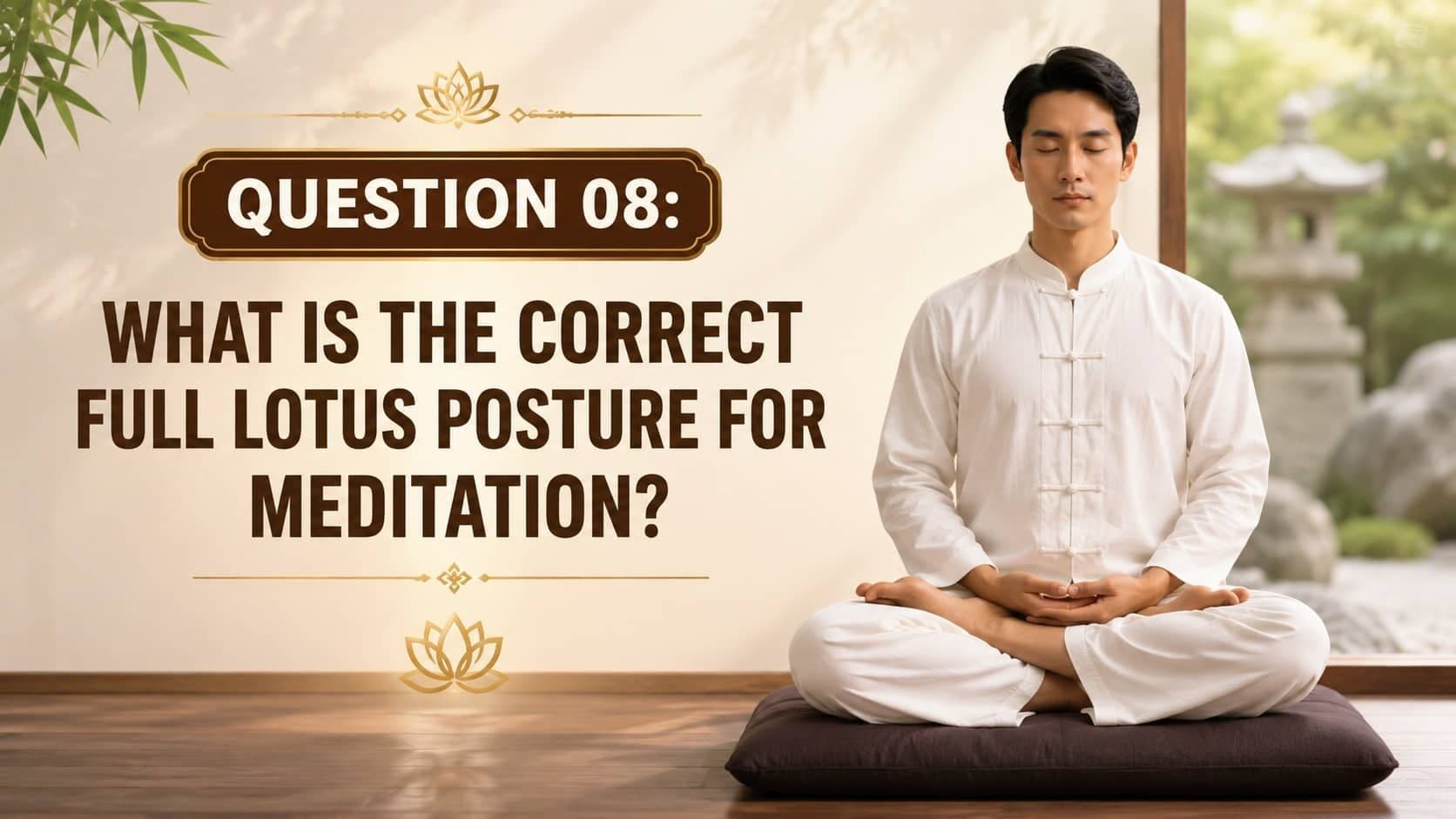
QUESTION 08: WHAT IS THE CORRECT FULL LOTUS POSTURE FOR MEDITATION?
ANSWER: The Full Lotus Posture is a foundation for meditation practice, providing unmatched support for mental concentration and enabling a deeper meditative state than any other posture. While this posture may initially seem daunting, often accompanied by leg pain and numbness, it remains a critical practice for entering meditative absorption.
The basic elements of the Full Lotus Posture are as follows:
● Sit on a flat surface with a thin cushion underneath to support the hips.
● Cross the legs by placing the left foot on top of the right thigh, then the right foot on top of the left thigh.
● Rest the hands palms-up on top of each other, positioned comfortably at the point where the legs cross.
● Keep the back upright and straight, avoiding excessive rigidity that could lead to strain and fatigue.
● Initially, focus the eyes on a point slightly ahead on the ground to stabilize the body and reduce movement. Once the body and mind settle, close the eyes to deepen concentration.
● Maintain relaxed shoulders, keep the mouth closed, and place the tongue gently against the upper teeth.
● Choose a cool, well-ventilated space while avoiding direct wind on the back.
● Keep the entire body soft and motionless, steering clear of stiffness or tension.
Practicing the full lotus posture can initially feel like a daunting ordeal, often accompanied by intense leg pain and numbness. Many beginners find their legs too stiff to cross properly, requiring repeated stretching and gradual adjustments to achieve the flexibility needed for the posture. Even after successfully sitting in the full lotus posture, the discomfort can be severe—leg pain and numbness may feel torturous, the body may sweat profusely, and the mind can struggle to find calm. Without a foundation of good potential for cultivation or experience from past lives, beginners often find these challenges overwhelming, such difficulties can deter them from continuing their practice, leading them to abandon meditation altogether due to fear and discomfort.
However, those with accumulated spiritual merit demonstrate a remarkable resilience. They possess an innate, unwavering faith that helps them endure such initial hardships. This faith empowers them to persist through the pain, gradually extending their sitting time. Over time, as practitioners acclimate to the posture and their minds settle, they come to realize that only the full lotus posture offers the optimal support for sustained concentration. No other posture can match its effectiveness.
Mastering the full lotus posture is a gradual and disciplined process. Practitioners must maintain complete control over their bodies, meticulously monitoring every position and muscle to ensure stillness and relaxation. The practice involves adhering to the following principles:
● Keep the back upright: Avoid slouching or curving the spine.
● Maintain balance: The body should remain centered, without leaning or tilting.
● Endure leg pain: Embrace discomfort as part of the practice, resisting the urge to move.
● Resist itching: Even if the face itches, the hand must remain still.
● Steady the gaze: Prevent the eyes from darting around, maintaining a calm, focused presence.
Through this rigorous practice, a sense of mental ease and comfort begins to emerge. Practitioners often experience an intuitive sense of benefit, cultivating a growing confidence in the full lotus posture's value.
This phase of practice is known as Basic Body Stabilizing. The duration of this stage varies from person to person. Only after achieving a stable sitting posture and experiencing comfort, even amid wandering thoughts, can practitioners advance to Mental Cultivation Practice phase.
Written by:
Janna
Related Articles:
Meditation Q&A: Question 7 – Meditation Techniques from Basic to Advanced
Meditation Q&A – Question 06: Is Stopping Thoughts Difficult or Harmful?
Question 05 – How Does Stillness of Mind Lead to Wisdom?
Truth Leads to Enlightenment: What Is Enlightenment?
Question 03: Why Does Seeing Truth Lead to Happiness?
Why Does Seeing Truths Lead to Morality? | Question 02
Instruction on Meditation: Essential Methods and Practice Guide
Part VI – Be Careful with the Basics of Meditation
Imperfect: Identity, Meditation, Karma and the Search for Inner Peace