
Janna · Nov 23, 2026
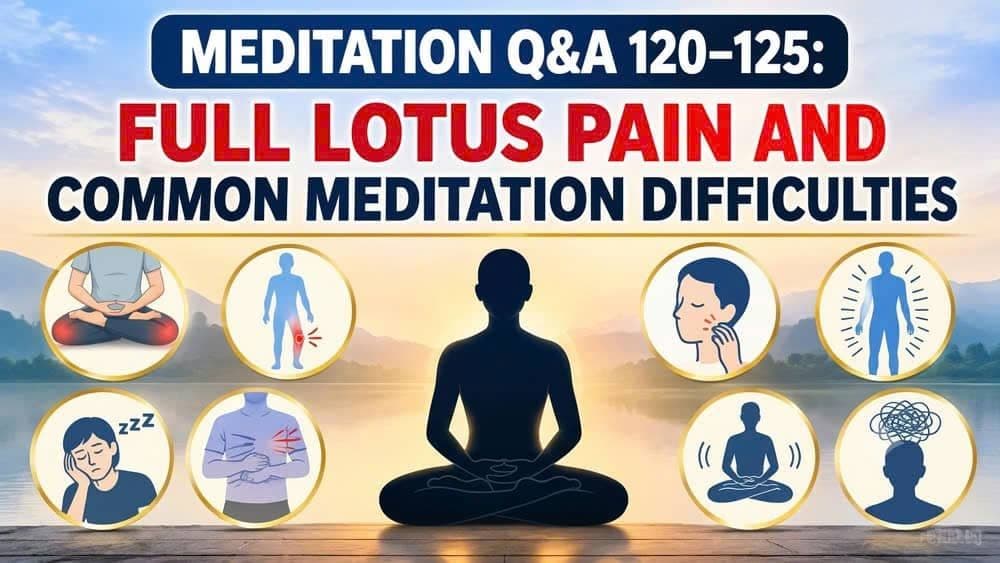
MEDITATION Q&A 120–125: FULL LOTUS PAIN AND COMMON MEDITATION DIFFICULTIES
QUESTION 120: WHAT SHOULD I DO IF MY LEGS HURT TOO MUCH WHEN SITTING IN THE FULL LOTUS POSTURE?
ANSWER: Leg pain during meditation arises from two causes:
- Physical Structure:
The body has not yet adapted to the full lotus posture, causing tendons to stretch, and blood vessels to become compressed, resulting in uncomfortable, numb pain.
- Past Karma:
Those with lighter karma experience less pain when sitting in the full lotus posture, while those with heavier karma suffer intense leg pain. However, the pain experienced during meditation is also a way of repaying past karma. If one endures the pain with determination, past karmic debts are gradually reduced. Even if enlightenment is not attained, enduring the pain can lead to fewer illnesses in old age and a more peaceful passing at the time of death.
Practitioners should carefully consider when to release their legs to end the meditation session:
. Do not end too early, as this weakens willpower. Instead, try to endure the pain to cultivate determination and patience while repaying past karma.
. Do not endure excessively, as it can inflate the ego, leading to irritability and conflict with others after meditation.
The key is to skillfully choose a balanced Middle Path when deciding to end the session.
QUESTION 121: IF SOMEONE HAS HAD LEG FRACTURES, JOINT INJURIES, OR LIGAMENT DAMAGE AND CANNOT BEAR THE PAIN OF SITTING IN THE FULL LOTUS POSTURE FOR LONG, SHOULD THEY CONTINUE?
ANSWER: Those who suffer from medical conditions or physical limitations related to bones, tendons, or joints, making it difficult to sit in the full lotus posture, face a significant disadvantage. This is because the full lotus posture is the most conducive to focus the mind. Such individuals must find an alternative sitting posture for meditation. However, the absence of the discomfort experienced in the full lotus posture is a notable loss, as that pain contributes to cultivating endurance
and concentration. In some cases, practitioners unable to sit in the full lotus posture might reverently bow to the Buddha every day and pray for the ability to do so. They can also attend meditation retreats, supporting others by offering service and donations, especially at retreats where participants sit strictly in the full lotus posture. Surprisingly, there have been instances where such sincere efforts led to an unexpected breakthrough, enabling the practitioner to successfully adopt the full lotus posture.
QUESTION 122: WHAT SHOULD I DO IF I FEEL ITCHING ON MY FACE OR A SENSATION OF ANTS CRAWLING ALL OVER MY BODY WHILE MEDITATING?
ANSWER: This is a common sensation for beginners in meditation, and it will subside with prolonged practice. Some schools of thought interpret this as residual "negative energy" (bad electric currents) from the past being released during meditation, causing itching. They advise against scratching, as moving the body disrupts the practice. Simply let the itch pass, and it will disappear over time. Another perspective is that this is a reaction of the peripheral nervous system as the body is forced to remain still. Once the body becomes accustomed to the stillness, the itching will cease. It can also be understood as a manifestation of negative thoughts or bad intentions that have arisen in the past but were not addressed or repented for, instead sinking into the subconscious. Now, as we practice meditation to attain a serene mind, these impure thoughts resurface in the form of itching. At such moments, it is recommended to practice repentance rather than scratching and moving the body. Gradually, the sensation will fade away.
QUESTION 123: WHAT SHOULD I DO IF IT IS VERY DIFFICULT TO SENSE THE WHOLE BODY WHILE MEDITATING?
ANSWER: Feeling the whole body (during inhalation and exhalation) is a crucial technique in meditation practice. Our entire body is covered by a large surface area of skin, meaning there are countless tactile nerve endings. When we sense the whole body, we activate this tactile nervous system, which greatly supports mindfulness. This mindfulness reduces the tendency to follow wandering thoughts; you are aware of those thoughts but no longer pay attention to them. If something obstructs your ability to sense the whole body, it is likely due to past karma. In such cases, persevere by regularly bowing to the Buddha with deep reverence, repenting for past wrongdoings, creating merit by helping others, and supporting fellow practitioners. Once sufficient merit is accumulated, the ability to sense the whole body will arise naturally.
QUESTION 124: WHY DOES RELAXING THE WHOLE BODY BRING ON DROWSINESS AND CAUSE THE BODY TO SWAY AND LOSE STABILITY?
ANSWER: Relaxing the whole body induces a sense of ease, but if you haven't had enough sleep, or if you don't maintain an effort to keep the body still, or if past karma is still heavy, drowsiness (lethargy) may arise.
When sitting in the full lotus posture, practitioners must stabilize and align the body by keeping it both relaxed and motionless, avoiding extremes.
● Focusing too much on relaxation causes movement and instability.
● Focusing too much on stillness causes tension and rigidity.
The correct approach is to maintain a balance where the body is both relaxed and immovable, requiring skillful practice.
Practitioners should ensure they get enough sleep because, without adequate rest, as soon as the mind calms during meditation, the brain will demand repayment of the sleep debt, and drowsiness will immediately follow.
There is also a type of drowsiness caused by past karma. In this case, simply crossing the legs to meditate can lead to nodding off and losing alertness for practice. If this is due to karma, it is essential to engage in repentance, perform many acts of merit, and support fellow practitioners in their spiritual efforts.
QUESTION 125: WHILE MEDITATING WITH THE INTENTION TO RELAX THE WHOLE BODY, WHY DOES THE CHEST AND ABDOMEN FEEL TENSE, AND SOMETIMES THE NECK AND SHOULDERS AS WELL?
ANSWER: Many people make the mistake of trying too hard to relax, unintentionally creating tension and stiffness in the neck, shoulders, chest, or abdomen. This is a psychological rebound effect—trying to relax ends up causing strain, just as trying to be gentle can result in harshness, or trying to be humble can lead to conceit. To address this, one must be skillful, subtle, gentle, and, importantly, possess sufficient merit to truly relax the whole body.
Some people can relax effortlessly, while others struggle and inadvertently create tension. This difference often stems from whether they have sufficient merit and subtlety. In daily life, if you are attentive and subtle in helping others with even small matters, this trait will carry over into your meditation practice, allowing you to skillfully and precisely engage in the practice. Merit is closely tied to meditative progress in this way. Additionally, if you frequently practice forgiveness, avoid nitpicking, and adapt flexibly to help others without rigidly clinging to rules, you will develop the subtle wisdom necessary for successful meditation practice.
Written by:
Janna
Related Articles:
Meditation Q&A 116–119: Busy Work, Wealth, Daily Practice and Preserving the Dharma
Meditation Q&A 111–115: Enlightenment, Karma, Meditation Illness and Sexual Desire
Meditation Q&A 106–110: Past-Life Knowledge, Divine Eye and Four Foundations of Mindfulness
Meditation Q&A 101–105: Seven Factors of Enlightenment and Six Supernatural Powers
Meditation Q&A 96–100: The Four Stages of Sainthood in Buddhism
Instruction on Meditation: Essential Methods and Practice Guide
The Basic Meditation Technique: 5 Essential Steps to Practice Meditation