
Video Production
How a Video Idea Becomes a Powerful Story | Janna Media
Published by
Janna ·
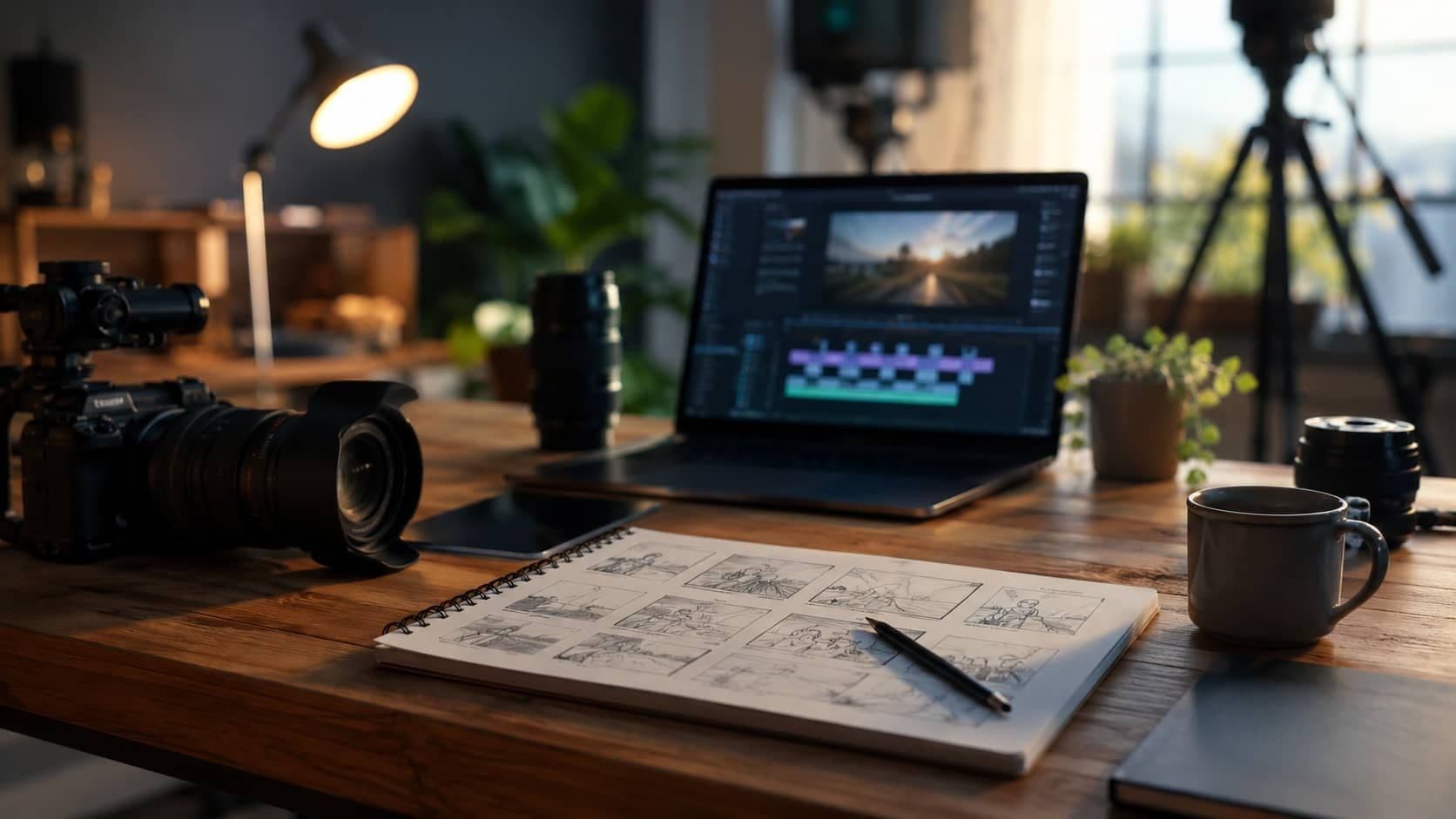
How a thoughtful video idea becomes a focused story before the camera starts rolling.
How a Thoughtful Video Idea Becomes a Focused Story Before the Camera Starts Rolling
A strong video does not begin when when the camera starts recording. It begins with a clear idea, much earlier—with a thought, a feeling, or a simple question that refuses to disappear.
Before production starts, there are important questions to answer: Why are we making this video? Who is it for? What should the audience understand or feel after watching it? And what is the simplest story we can tell to communicate that idea clearly?
Perhaps there is a story that deserves to be heard.
Perhaps there is a person whose experience could inspire someone else.
Perhaps there is a message that, if told with sincerity, might change the way someone sees the world.
At Janna Media, we believe that thoughtful preparation creates better storytelling, a good storytelling is not simply about making something beautiful to watch. A storyboard is not simply a sequence of shots. It is about creating something meaningful enough to stay in a person's heart long. It is a visual plan that helps connect purpose, audience, message, emotion, and pacing before a production team steps onto the set.
1. Start With Why
Every video should begins with a reason for existing.
Why does this video need to exist? Is the goal to educate, inspire, explain, introduce an idea, tell a human story, or encourage the audience to take action?
A clear purpose prevents a video from becoming a collection of beautiful but disconnected images. There something we want people to understand? Something we want them to feel? Something we hope they will remember when the video is over?
So, before developing the storyboard, ask:
• What is this video trying to accomplish?
• Why does this story matter?
• What does the audience need to know?
• What should remain in their mind after the final frame?
When the purpose is clear, the entire story begins to find its direction, every creative decision becomes easier.
2. Know the Person Behind the Screen
A video cannot effectively speak to everyone at once.
Behind every pair of eyes is a human being carrying a unique story—hopes, worries, memories, dreams, and perhaps struggles that nobody else can see. Understanding the audience helps determine the language, examples, pacing, visual style, and emotional tone of the story.
That is why knowing our audience matters.
Who is this story meant to reach?
What might they be going through?
What might they be searching for?
What might make them pause and say, “This is exactly what I needed to hear today”?
When the audience is clearly understood, the content becomes more human and relevant. Our storytelling becomes more compassionate.
3. Find the Central Idea, the One Truth at the Heart of the Story
A video may contain hundreds of ideas, many interesting thoughts, but the most powerful stories usually have one central idea holding everything together.
This is the sentence that the entire production should serve.
If the audience remembers only one thing, what should it be?
One thought worth remembering.
One feeling worth carrying.
One message that remains after everything else has faded.
Once that idea is identified, unnecessary information becomes easier to remove. Scenes, dialogue, interviews, music, and visual elements can all be evaluated against the same question:
Does this help communicate the central idea?
If it does not, it may not belong in the final story.
4. Build the Emotional Rhythm
A storyboard helps us design this emotional journey before production begins. Good storytelling is not only about information. It is also about how the audience feels as the story unfolds.
A thoughtful storyboard considers the emotional journey from beginning to end.
Perhaps we begin with a question.
Then we invite the audience into a human experience.
We allow them to recognize themselves in the story.
We reveal something they did not expect.
And finally, we leave them with a thought that continues quietly in their mind.
This emotional rhythm gives the video movement.
Even a short video can have a beginning, development, and conclusion. The audience should feel that they are being taken somewhere rather than simply shown a sequence of scenes.
5. Think in Frames Before Thinking in Cameras
The storyboard allows the creative team to imagine the story visually before production begins. Sometimes the most powerful moment in a video is not the grandest one.
What should the audience see at each important moment?
A gentle smile.
A hand resting quietly on a table.
A long pause.
A beautiful image is not necessarily a meaningful image.
Before keeping a scene, we should ask:
Does this moment serve the story?
Does it reveal something?
Does it make us feel something?
Does it help us understand the person or the message?
If it does not, perhaps we should have the courage to let it go.
The purpose is not to make every shot complicated. Often, the strongest visual choice is the simplest one.
The final frame should not simply mark the end of the video.
It should open a door inside the viewer.
A good story ends on the screen.
A meaningful story continues in the heart.
At Janna Media, we want the camera to do more than record what happens.
We want it to help people feel why it matters.
6. Look for the Human Moment
Technology can make a video look impressive, but technology alone does not make a story meaningful.
People connect with people.
These small moments remind us that there is a real human life behind the story.
Technology can make an image sharper.
Lighting can make it more beautiful.
Music can make it more dramatic.
But authenticity is what makes people believe
The sound of someone taking a breath before telling the truth.
Expressions, gestures, pauses, small details, honest conversations, and real environments can often communicate more than elaborate visual effects.
For Janna Media, keeping a production human means remembering that behind every subject is a person with experiences, emotions, questions, and hopes.
The camera should not simply record what happens. It should help the audience understand why it matters.
7. Make Every Scene Earn Its Place
Before production begins, the storyboard is also an opportunity to edit.
Ask of every scene:
What does this add to the story?
If a scene repeats information already communicated elsewhere, it may not be necessary. If a beautiful shot does not support the central idea, it may be better left out.
Do we want them to feel hopeful?
Inspired?
Moved?
More compassionate?
Perhaps we want them to sit quietly for a moment and think about their own lives.
A focused story is not necessarily a story with more content. It is often a story with less unnecessary content.
Clarity comes from knowing what to include—and what to leave behind.
8. Plan the Journey to the Final Edit
The storyboard should not only imagine the opening. It should anticipate how the entire story will come together in the edit.
Think about transitions, pacing, narration, interviews, music, silence, visual continuity, and the final message.
A strong opening should create a reason to continue watching.
The middle should develop the idea without losing focus.
And the ending should provide a meaningful conclusion rather than simply stopping.
When these decisions are considered early, the editing process becomes more intentional and efficient.
9. From Idea to Story
A thoughtful video idea becomes powerful when it is given structure. This is why a storyboard is much more than a production document.
It is where an idea begins to become a human story.
It brings purpose and creativity together.
It gives direction to the camera, meaning to the edit, and intention to every frame.
Most importantly, it reminds everyone involved that they are not simply producing content.
They are telling something that may be seen by someone they will never meet.
Someone watching alone late at night.
Someone searching for encouragement.
Someone trying to understand something.
Someone who may need a few honest words at exactly the right moment.
We may never know who that person is.
But we can choose to create with them in mind.
Before the camera starts rolling, the production team should already understand the purpose, audience, central idea, visual direction, and emotional journey.
The storyboard becomes the bridge between imagination and execution.
It allows everyone involved—from the creative team to the camera crew and editors—to see the same story before it exists.
At Janna Media, this is where thoughtful production begins: not with the camera, but with the question of what is worth showing, why it matters, and how we can tell it clearly. we believe that is where thoughtful storytelling begins—not with the camera, but with the heart.
Because a powerful video does more than capture attention, every frame has a purpose—and every frame has a better chance of reaching the person watching.
Janna